
Why Your Second Violation Search Starts in Non-Standard Territory
You received a second violation notice from Kansas KDOR and the carrier that wrote your first SR-22 just sent a non-renewal letter. The search you're running now isn't the same search you ran after your first violation. You've moved risk tiers. The carriers advertising cheap SR-22 coverage write preferred and standard risks; your second violation puts you in non-standard territory where fewer carriers compete and pricing follows different rules.
Kansas operates a dual-track suspension system for repeat violations. Your Department of Revenue Administrative License Suspension runs parallel to any court-imposed suspension from criminal proceedings. Both tracks require separate filings, separate fees, and separate reinstatement steps. Most comparison tools show you one SR-22 quote without surfacing that you're satisfying two different administrative requirements. The $59 reinstatement fee cited in generic searches is the base KDOR fee for one track; you'll pay reinstatement fees to both systems before you're legal to drive.
Compare car insurance rates in your state
Get quotes from licensed carriers — no obligation, no spam, results in minutes.
Get Your Free QuoteKansas Second-Offense ALS Hard Period
1 year
Under K.S.A. 8-1002, a second DUI arrest triggers a mandatory 1-year hard suspension on the administrative track before restricted driving privileges become available. This runs independently of any court-imposed suspension and requires ignition interlock device installation as a reinstatement condition.
K.S.A. 8-1002 (Kansas Implied Consent Law)
The Structural Reality of Dual-Track Filing
Kansas doesn't consolidate administrative and judicial suspensions the way some states do. KDOR's Division of Vehicles administers the Administrative License Suspension triggered by your arrest or test refusal. The court imposes a separate criminal suspension as part of sentencing. These suspensions run concurrently but require independent compliance. An SR-22 filed to satisfy the court does not automatically satisfy KDOR, and vice versa.
This creates a compliance trap most second-violation drivers hit 60 days into their suspension period. They file SR-22 with the court as ordered, assume they're compliant, and receive a second suspension notice from KDOR for failing to maintain proof of insurance on the administrative track. The solution isn't filing two separate SR-22 policies; it's ensuring your carrier files the SR-22 certificate to both the KDOR Driver Control Bureau and the court simultaneously. Not every non-standard carrier writes Kansas with dual-track filing capability built into their process.
The 1-year SR-22 maintenance period cited in the data layer is the minimum filing duration for this trigger. It starts from your conviction date, not your filing date. If you file SR-22 six months after conviction, you're maintaining it for 18 months total. Lapse during that window triggers automatic re-suspension on both tracks, and reinstatement starts over with new fees.
Your carrier must file SR-22 certificates to Kansas KDOR Driver Control Bureau AND the court that imposed your criminal suspension. Single-track filing leaves one suspension active.
Which Carriers Actually Write Second-Violation Kansas Risks

Bristol West operates in Kansas as a non-standard specialist and writes SR-22 after multiple violations. Their underwriting accepts second DUIs with ignition interlock compliance; quotes require either online submission or broker channel depending on your county. The General writes Kansas non-standard with explicit SR-22 and non-owner SR-22 capability; they're one of the few carriers that will quote you if you don't currently own a vehicle but need coverage to satisfy reinstatement. Dairyland writes 38 states including Kansas and specializes in high-risk SR-22 placements; their online quote tool handles second violations without requiring a broker intermediary.
Progressive and Geico both write SR-22 in Kansas, but their appetite for second violations varies by underwriting cycle. Progressive's non-standard tier accepts some repeat DUI risks; Geico writes SR-22 but may decline second violations depending on the time between offenses and whether ignition interlock is required. State Farm writes Kansas SR-22 but operates in preferred tier; they're unlikely to quote a second violation within three years of the first. If your first violation aged out beyond five years, State Farm becomes viable again; otherwise you're working with the three non-standard specialists above.
Related Articles





What Actually Determines Your Premium
Premium after a second violation is driven by three factors in this order: your county's base rate, the surcharge your violation history adds to that base, and the coverage selections you're required to carry. Kansas requires $25,000 bodily injury per person, $50,000 per accident, $25,000 property damage, plus PIP and uninsured motorist coverage. That's your floor. SR-22 filing adds a small one-time fee set by the carrier (typically between $15 and $50), but the filing fee is not the cost driver.
The cost driver is the non-standard tier surcharge. Carriers price repeat violations by applying a multiplier to the base rate for your profile. That multiplier varies by carrier and by the spacing between your violations. A second DUI within two years of the first carries a higher multiplier than a second DUI five years later. Some carriers flatten the curve by capping surcharges at a fixed ceiling; others apply compounding multipliers that make a second violation cost more than twice a first violation.
Your county matters because Kansas is a state-regulated market where base rates vary by geographic risk pool. Johnson County, Douglas County, and Sedgwick County have higher base rates than rural counties due to claim frequency and theft rates. The violation surcharge applies on top of that base, so a second-violation driver in Overland Park pays more than a second-violation driver in Hays even when the violation circumstances are identical. There's no statewide average that applies to your situation; you're comparing county-specific quotes from carriers writing non-standard in your zip code.
Kansas Base Reinstatement Fee
$59
This is the KDOR administrative reinstatement fee for license suspension triggers including second violations. It does not include court fines, ignition interlock installation costs, or the separate reinstatement fee the court may impose on the judicial track. Drivers satisfying dual-track suspensions pay reinstatement fees to both systems.
Kansas Department of Revenue, Division of Vehicles
The Restricted License Window and IID Requirement
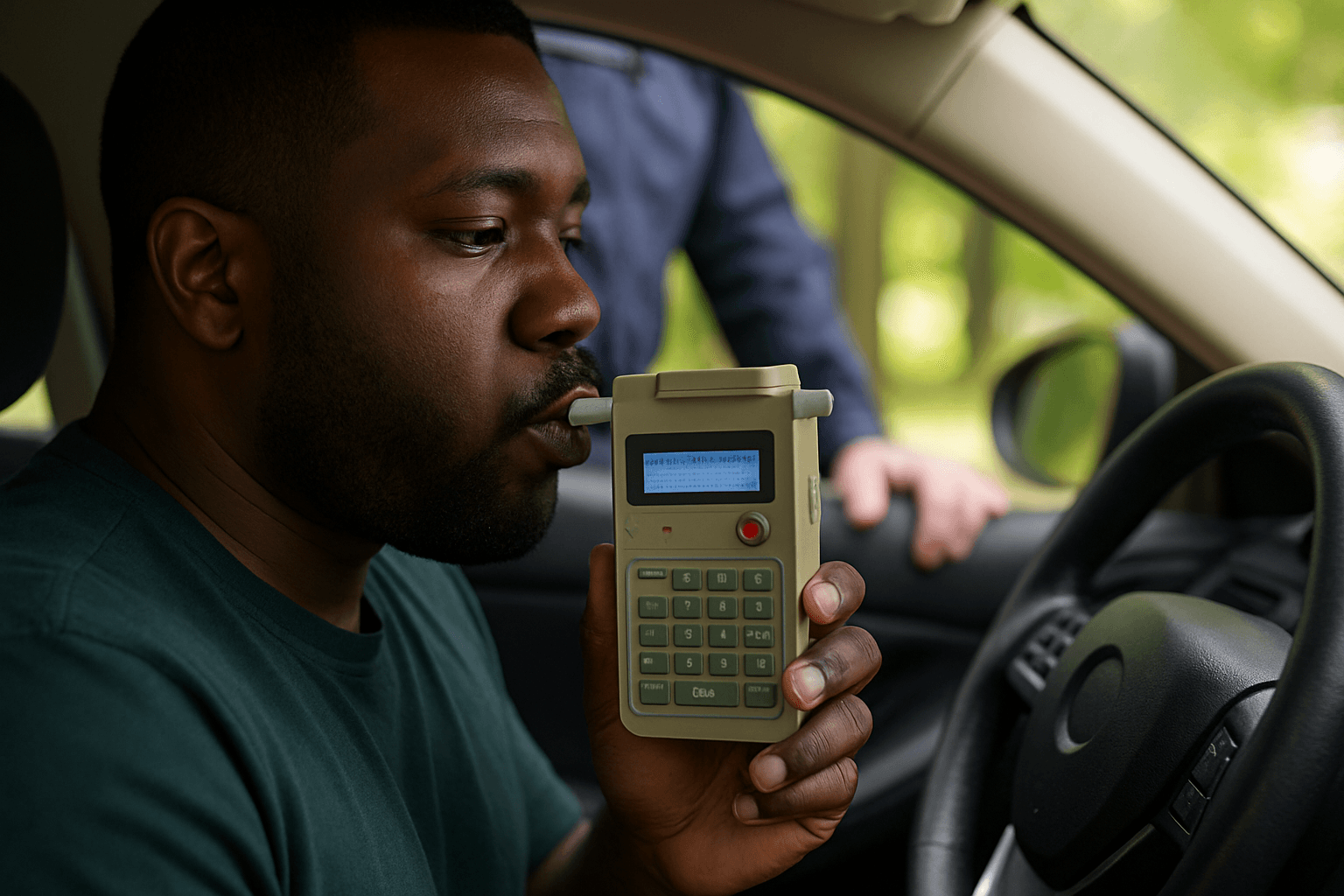
Kansas allows restricted driving privileges after the hard suspension period expires, but second-offense DUI suspensions carry a mandatory 1-year hard period under the administrative track. During that year, no restricted license is available. After the year expires, you can petition the court for restricted driving privileges, but issuance requires ignition interlock device installation as a non-negotiable condition per K.S.A. 8-1015.
The restricted license is court-defined. Typical approvals cover travel between home and work, school, medical appointments, or other court-approved purposes during court-defined hours. This is not full driving privileges; it's a narrow pathway that lets you keep employment while completing your suspension period. Violating the restrictions (driving outside approved hours, driving for non-approved purposes, or failing IID compliance reporting) triggers automatic revocation and reinstatement starts over.
IID costs are separate from your SR-22 insurance premium. Installation runs $75 to $150 depending on the provider; monthly monitoring and calibration fees add $60 to $90 per month for the duration of your restricted period. Kansas administers the IID program through the Division of Vehicles and requires periodic compliance reporting. Your carrier doesn't care whether you have an IID installed, but the court and KDOR do. Budget both costs separately when planning your reinstatement pathway.
Start With the Carriers Writing Your Tier
The cheapest SR-22 after a second violation in Kansas comes from the carrier that writes non-standard in your county and applies the lowest surcharge multiplier to your specific violation spacing. That's not a single carrier name you can Google. It's a comparison across Bristol West, The General, and Dairyland, with Progressive and Geico as conditional options depending on how long ago your first violation occurred. Request quotes from all five. Submit identical coverage parameters: state minimum liability plus the PIP and uninsured motorist coverage Kansas requires, your actual vehicle, your actual address, and both violation dates with accurate spacing. Compare the premium, verify dual-track SR-22 filing capability, and confirm the carrier will maintain your SR-22 for the full 1-year period without requiring you to re-file manually.
If you don't currently own a vehicle but need SR-22 to satisfy reinstatement, request non-owner SR-22 quotes from The General, Dairyland, and Progressive. Non-owner policies provide the liability coverage Kansas requires without insuring a specific vehicle. The SR-22 certificate files the same way; KDOR and the court don't distinguish between owner and non-owner filings. Non-owner premiums are lower than owner premiums because the carrier isn't covering collision or comprehensive risk, but you're still paying the non-standard surcharge for your violation history. Expect non-owner quotes in the range you'd pay for liability-only coverage on an older sedan.