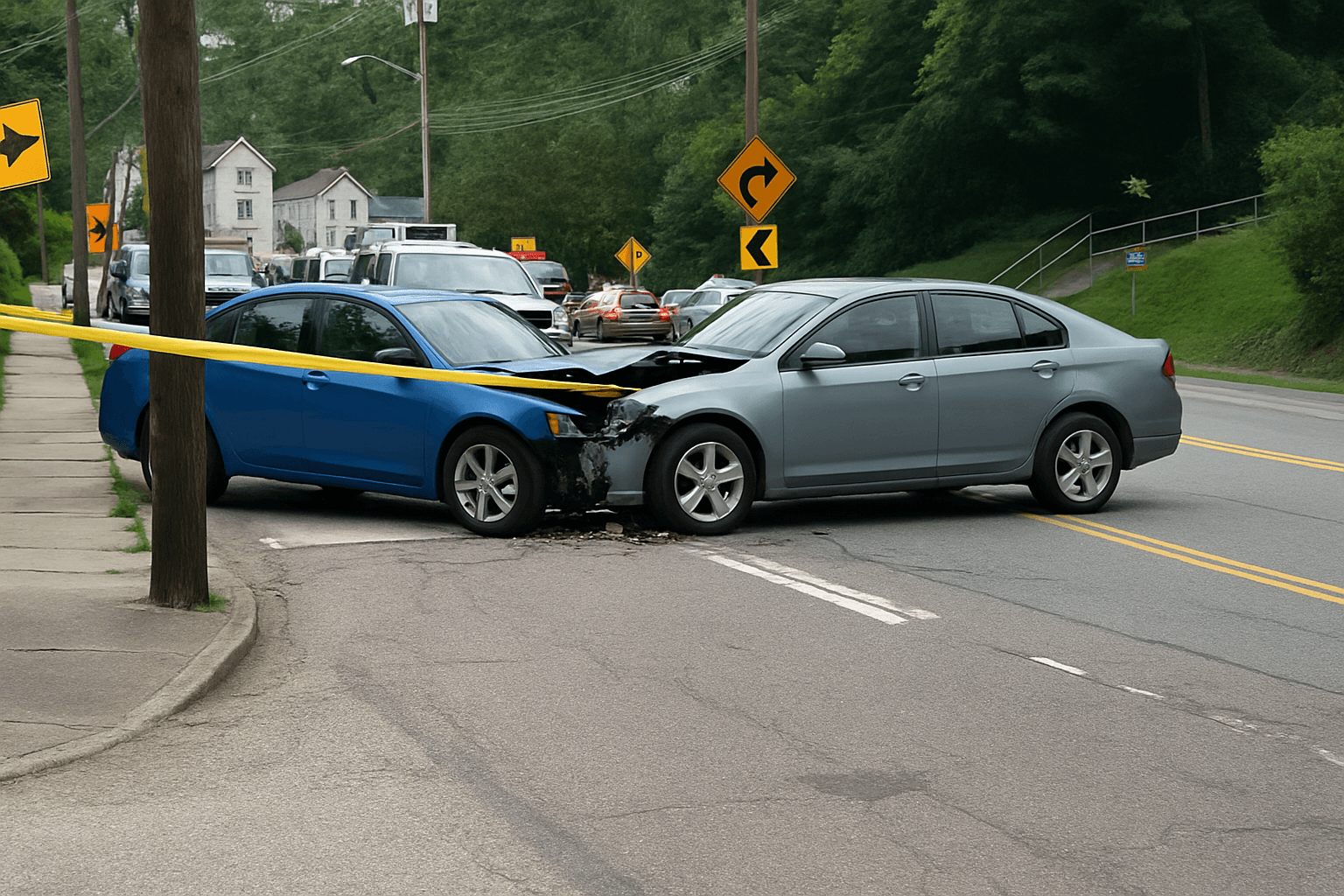
Kansas Post-Accident SR-22 Reality
Your license was suspended after an at-fault accident in Kansas, and you've been told you need SR-22 insurance to get it back. What no one explained: Kansas runs two parallel suspension tracks—the Kansas Department of Revenue Division of Vehicles handles the administrative suspension, while the court can impose a separate judicial suspension as part of any criminal case. SR-22 is required to satisfy the administrative reinstatement, but that requirement doesn't necessarily kick in the day you receive the suspension notice.
The cheapest SR-22 insurance in Kansas after an accident isn't about finding a discount carrier—it's about understanding which track you're on, when SR-22 actually becomes mandatory, and which of the eight carriers writing post-accident policies in this state will quote your specific situation. The $59 state reinstatement fee is fixed; the carrier filing fee and monthly premium are where comparison matters.
Compare car insurance rates in your state
Get quotes from licensed carriers — no obligation, no spam, results in minutes.
Get Your Free QuoteKansas Reinstatement Fee
$59
The Kansas Division of Vehicles charges a flat $59 reinstatement fee for license suspensions following at-fault accidents. This fee is separate from any carrier SR-22 filing fees and is paid directly to KDOR when you apply for reinstatement.
Kansas Department of Revenue, Division of Vehicles
Administrative vs Court Suspension Track
Kansas maintains a clear dual-track system: the Kansas Department of Revenue Division of Vehicles handles administrative suspensions triggered by at-fault accidents reported through the state's electronic insurance verification system, while courts impose separate judicial suspensions if criminal charges result from the accident. These run concurrently or consecutively and have separate reinstatement requirements.
Here's the structural reality most drivers miss: SR-22 is required for administrative reinstatement, but the timing of when that requirement attaches depends on whether the suspension originated from KDOR (uninsured driver at fault) or from a court order (reckless driving, leaving the scene, or other criminal charges tied to the accident). If your suspension is purely judicial and you maintained valid insurance at the time of the accident, you may not need SR-22 at all—only court-ordered conditions like a defensive driving course or restitution.
The confusion multiplies when both tracks apply. Drivers suspended on both tracks must satisfy both the DOR administrative reinstatement requirements (fees, SR-22 if required) AND any court-ordered conditions before full driving privileges are restored. If you were uninsured at the time of the accident, SR-22 is mandatory for the administrative track. If you were insured but face criminal charges, the court may or may not require SR-22 as part of sentencing.
If you were insured at the time of the accident and face only a judicial suspension, SR-22 may not be required—verify with KDOR before paying for coverage you don't need.
Eight Carriers Writing Kansas Post-Accident SR-22

Geico, Progressive, and The General write SR-22 policies for post-accident Kansas drivers and offer online quoting. Geico and Progressive serve standard-tier drivers whose accidents are their only major violation; The General specializes in non-standard risk and will quote drivers with multiple violations or prior suspensions. All three provide electronic SR-22 filing to KDOR within 24 hours of policy binding.
Dairyland, Bristol West, and National General write non-standard and post-accident policies in Kansas. Dairyland operates in 38 states and quotes online; Bristol West requires broker contact for post-accident cases; National General (now part of Allstate) writes post-accident policies and can file SR-22 electronically. State Farm writes SR-22 in Kansas but does not explicitly advertise post-accident acceptance—approval depends on accident details and underwriting review. USAA writes SR-22 for eligible military members but does not advertise post-accident acceptance for all policyholders.
Related Articles




Non-Owner SR-22 If You Sold the Vehicle
If you no longer own a vehicle following the accident—whether you sold it, totaled it, or simply cannot afford to keep it registered—a non-owner SR-22 policy satisfies Kansas reinstatement requirements without insuring a specific vehicle. Non-owner policies provide liability coverage when you drive a borrowed or rental vehicle and meet the state's SR-22 filing obligation.
Geico, Progressive, USAA (for eligible members), The General, and Dairyland all write non-owner SR-22 policies in Kansas. Monthly premiums for non-owner policies typically run lower than standard policies because the carrier assumes less risk—you're not driving daily. The SR-22 filing fee (typically $15 to $50 depending on carrier) still applies, and the policy must remain active for the full duration KDOR specifies on your reinstatement notice.
Non-owner policies do not cover vehicles you own or vehicles registered in your household. If you live with family members who own vehicles, check whether the carrier requires you to be listed as an excluded driver on their policies to avoid coverage gaps.
Kansas SR-22 Filing Period
1 year
Kansas requires SR-22 filing for one year following reinstatement after at-fault accident suspensions. The filing period begins the day KDOR receives electronic confirmation from your carrier, not the day you purchase the policy. A lapse in coverage during this period triggers automatic re-suspension.
Kansas Department of Revenue, Division of Vehicles
Filing Fee and Monthly Premium Breakdown
The SR-22 filing itself is a one-time carrier service fee, typically $15 to $50 depending on which carrier you choose. Geico charges approximately $25; Progressive charges around $25; The General charges approximately $15. These fees are separate from your monthly premium and separate from the $59 state reinstatement fee you will pay to KDOR.
Monthly premium after an at-fault accident depends on accident severity, your age, your county, and whether you have prior violations. Standard-tier carriers like Geico and Progressive will quote post-accident drivers with clean prior records; non-standard carriers like The General and Dairyland specialize in higher-risk cases and typically charge higher monthly premiums in exchange for acceptance. Compare at least three carriers—monthly premium differences of $40 to $80 are common for identical coverage limits.
Compare Carriers Before You Buy
Kansas does not regulate SR-22 filing fees or post-accident premium rates, so each carrier sets its own underwriting rules and pricing. The cheapest carrier for your neighbor may not be the cheapest for you—accident details, your ZIP code, your prior driving record, and the vehicle you're insuring all affect the quote.
Request quotes from at least three carriers that write post-accident SR-22 in Kansas: one standard-tier (Geico or Progressive), one non-standard specialist (The General or Dairyland), and one broker-accessed option (Bristol West or National General if you work with an agent). Provide identical coverage limits to each—Kansas minimums are $25,000 per person, $50,000 per accident for bodily injury, and $25,000 for property damage—so you're comparing equivalent policies. Verify that each carrier can file SR-22 electronically with KDOR and confirm the one-year filing period before binding coverage.