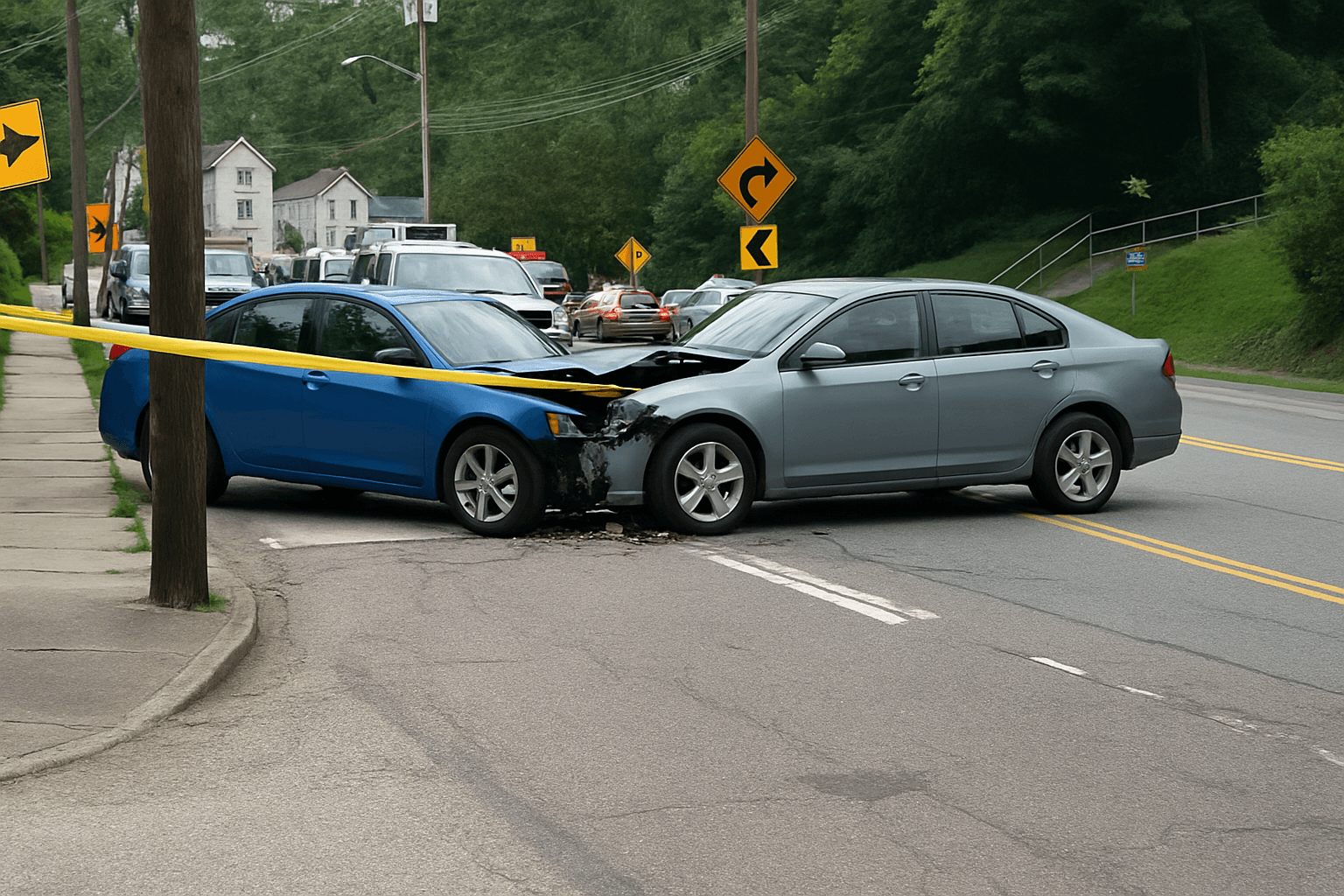
When Kansas Requires SR-22 After Your At-Fault Accident
You caused an accident in Kansas. Your insurer is handling the claim, but now you're facing questions about SR-22 filing requirements and whether your rates will make coverage unaffordable. The structural reality: Kansas does not require SR-22 simply because you were at fault. SR-22 filing is triggered by the specific violation that either caused the accident or was discovered during the investigation — DUI, driving uninsured, or a points-based suspension. If your at-fault accident did not involve any of those violations, you do not need SR-22 at all.
This distinction matters because SR-22 shapes what carriers will write your policy and what tier you fall into. Drivers who need SR-22 after a Kansas at-fault accident are working through two separate problems: finding a carrier willing to write SR-22 in their county, and managing the rate increase that comes from both the underlying violation and the accident itself. The cheapest path forward depends on understanding which violation is actually driving your requirement and shopping carriers that specialize in exactly that combination.
Compare car insurance rates in your state
Get quotes from licensed carriers — no obligation, no spam, results in minutes.
Get Your Free QuoteKansas SR-22 Filing Period
3 years
Kansas typically requires SR-22 filing for 3 years after DUI conviction or insurance-related suspensions, measured from the reinstatement date. Lapse in SR-22 during this period triggers automatic re-suspension by the Kansas Department of Revenue Division of Vehicles.
Kansas Department of Revenue Division of Vehicles
The Three Kansas Triggers That Pair SR-22 With At-Fault Accidents
Kansas law separates at-fault liability from SR-22 filing requirements. The at-fault accident itself does not trigger SR-22. What triggers SR-22 is the violation that either caused the accident or came to light during the post-accident process. Three violations most commonly pair with at-fault accidents to create SR-22 filing requirements in Kansas.
DUI or DWI convictions require SR-22 under Kansas Administrative License Suspension rules. If your at-fault accident involved impaired driving and resulted in a DUI charge, Kansas will impose both an Administrative License Suspension through the Division of Vehicles and a separate judicial suspension through the criminal court. Both tracks require SR-22 filing before reinstatement, and both run concurrently. The at-fault accident is not the SR-22 trigger — the DUI is. The accident simply makes the underlying DUI more visible to insurers and raises the severity of the rate impact.
Driving uninsured at the time of the accident triggers SR-22 under Kansas continuous coverage rules (K.S.A. 40-3104). Kansas uses an electronic insurance verification system where carriers report policy cancellations directly to the Division of Vehicles. If the accident revealed that you were uninsured, Kansas will suspend your registration and require SR-22 filing to prove you've obtained coverage. The reinstatement fee for this trigger is $59, and you'll need to maintain SR-22 for the full filing period even after reinstatement.
Points-based suspensions triggered by the at-fault accident itself can require SR-22 in some cases. Kansas uses a points system where serious violations accumulate toward suspension thresholds. If your at-fault accident involved careless driving, reckless driving, or another points-eligible violation that pushed you over the suspension threshold, the Division of Vehicles may require SR-22 as a condition of reinstatement. This is less common than DUI or uninsured triggers but still appears when the accident involved aggravating factors beyond simple negligence.
Kansas SR-22 filing is not about fault — it's about the specific violation behind the accident. If no violation appears on your DMV record, you don't need SR-22.
How Kansas Carriers Price SR-22 After At-Fault Accidents

Standard-tier carriers like State Farm, Geico, and Progressive write SR-22 in Kansas, but only for drivers whose violation history fits within their underwriting guidelines. If your at-fault accident was paired with a first-offense DUI and you have no prior violations, standard-tier carriers may still write your policy with SR-22 filing. The rate increase reflects both the DUI surcharge and the at-fault accident surcharge, but the SR-22 filing fee itself is a small one-time cost set by the carrier. Standard-tier carriers typically charge between $15 and $35 for SR-22 filing in Kansas. The larger cost is the premium increase from the underlying violation.
Non-standard carriers like The General, Bristol West, Dairyland, and National General specialize in post-violation coverage and write Kansas SR-22 for drivers standard-tier carriers reject. If your at-fault accident involved multiple violations, prior suspensions, or a second DUI, non-standard carriers are often the only option. Non-standard policies cost more per month than standard-tier coverage, but they provide the SR-22 filing Kansas requires and keep you legal. Drivers in this tier should compare at least three non-standard carriers — rate variation between non-standard carriers in Kansas is significant even when all are writing the same risk profile.
Related Articles





State Minimum Liability vs Full Coverage With SR-22
Kansas state minimum liability is $25,000 per person for bodily injury, $50,000 per accident for bodily injury, and $25,000 per accident for property damage. Personal injury protection and uninsured motorist coverage are also required by Kansas law. If you need SR-22 after an at-fault accident, state minimum liability will meet the legal filing requirement and cost less per month than full coverage. This is the cheapest path forward if you do not own a financed vehicle and are not concerned about covering your own vehicle damage in a future accident.
Full coverage (liability plus collision and comprehensive) makes sense if you still owe money on your vehicle or if your vehicle's value justifies the additional premium. Lenders require full coverage on financed vehicles, and Kansas SR-22 filing does not change that requirement. The cheapest full-coverage option after an at-fault accident typically comes from non-standard carriers willing to write both the SR-22 filing and the collision/comprehensive coverage in one policy. Splitting coverage between carriers is not possible when SR-22 is required — the SR-22 must be filed by the carrier providing your liability coverage.
Drivers who no longer own a vehicle can meet Kansas SR-22 requirements with a non-owner SR-22 policy. Non-owner SR-22 provides state minimum liability coverage when you drive a vehicle you do not own and satisfies the SR-22 filing requirement Kansas imposes. Geico, Progressive, The General, Dairyland, and USAA all write non-owner SR-22 in Kansas. Non-owner policies cost less than standard auto policies because they do not cover a specific vehicle, making them the cheapest option for suspended drivers who need SR-22 to reinstate but do not currently have a car.
Kansas SR-22 Reinstatement Fee
$59
Kansas charges a $59 reinstatement fee specifically for license suspensions triggered by uninsured driving or insurance lapses. This fee is separate from the SR-22 filing fee your carrier charges and must be paid to the Division of Vehicles before your license is reinstated.
Kansas Department of Revenue Division of Vehicles
Kansas Carrier Availability and Filing Speed
Kansas SR-22 can be filed electronically by most carriers writing in the state, and the Division of Vehicles typically processes electronic filings within 1-3 business days. State Farm, Geico, Progressive, The General, Bristol West, Dairyland, and National General all file Kansas SR-22 electronically. Paper SR-22 filings are slower and should be avoided unless your carrier does not support electronic filing in Kansas.
Not all Kansas carriers write SR-22 for all violation types. Geico writes Kansas SR-22 for DUI and uninsured violations but may decline drivers with multiple at-fault accidents or prior SR-22 lapses. Progressive and State Farm write Kansas SR-22 for first-offense DUI cases paired with at-fault accidents but tier drivers into higher-rate brackets. Non-standard carriers like The General and Bristol West accept a wider range of violations and write Kansas SR-22 for drivers standard-tier carriers reject, but their base premiums start higher. The cheapest carrier for your specific combination of at-fault accident plus violation depends on which carrier's underwriting guidelines your profile fits.
Compare Kansas SR-22 Carriers Before You Commit
Kansas SR-22 rate variation between carriers is large enough that comparing quotes saves real money over the 3-year filing period. Use the comparison tool on this site to request quotes from carriers writing Kansas SR-22 for your specific violation. Enter your county, violation type, and whether you need non-owner SR-22 or standard auto coverage. You'll receive quotes from Kansas-licensed carriers that specialize in post-violation SR-22 filing. Compare monthly premiums, filing fees, and payment plan options before committing to a carrier.