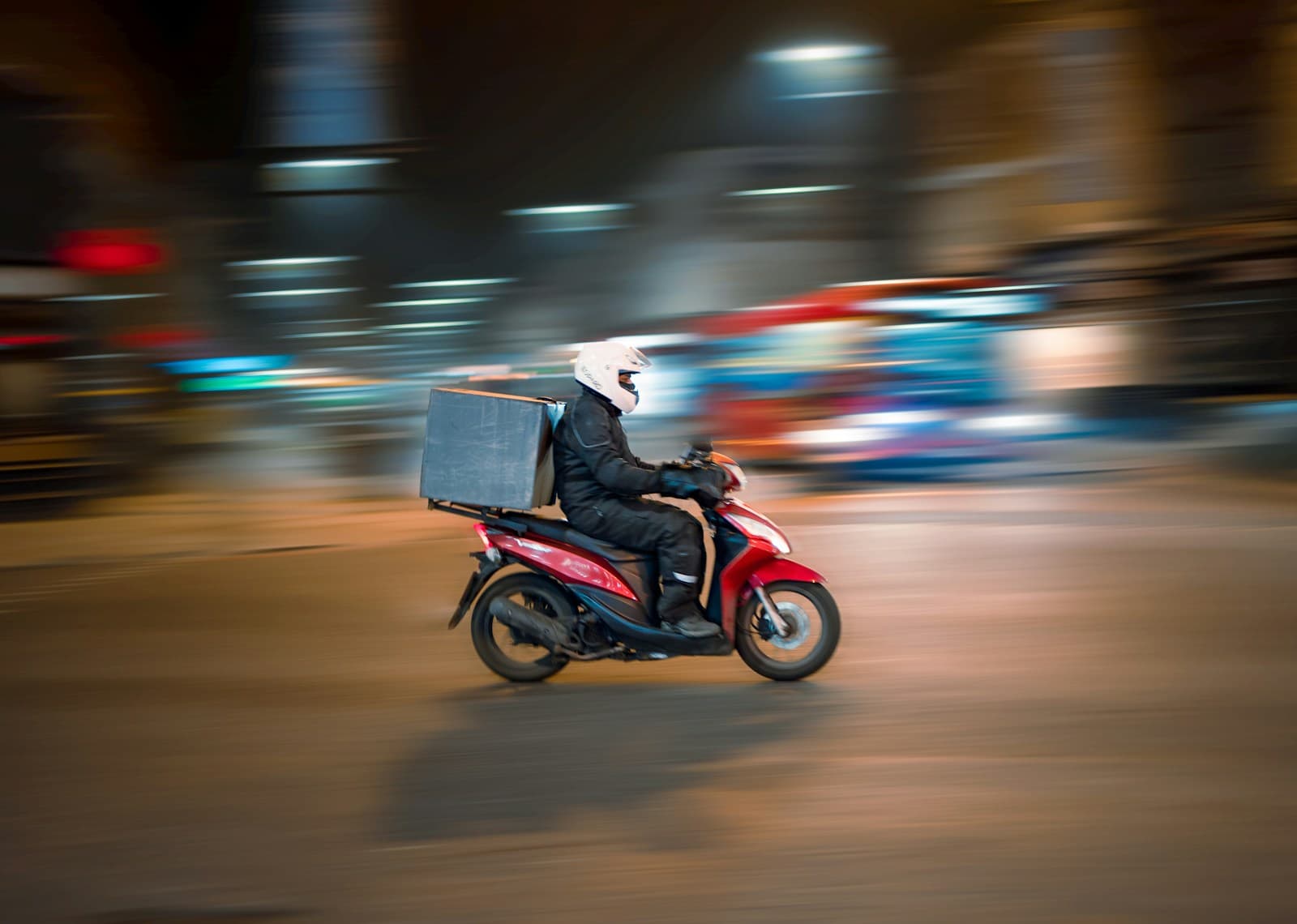
Why Delivery Work Blocks Most SR-22 Carriers
You applied for SR-22 coverage through three non-standard carriers. All three declined when you disclosed delivery driving. The declination letters cite commercial use exclusions, even though you drive your own car and DoorDash classifies you as an independent contractor, not a commercial driver.
Kansas SR-22 carriers treat delivery work as elevated-risk commercial activity regardless of whether your vehicle registration is personal or commercial. National General, Bristol West, and The General — three of the largest non-standard SR-22 writers in Kansas — automatically decline applicants who report delivery driving as their primary occupation or primary vehicle use. This is occupation-specific underwriting, not a filing requirement issue. You need SR-22, but the carriers who write SR-22 for DUI and suspension cases won't write delivery drivers.
Compare car insurance rates in your state
Get quotes from licensed carriers — no obligation, no spam, results in minutes.
Get Your Free QuoteKansas Reinstatement Fee
$59
The Kansas Department of Revenue charges $59 to reinstate a suspended license after SR-22 filing is confirmed and all suspension conditions are satisfied. This is the base administrative fee and does not include SR-22 filing fees charged by the carrier.
Kansas Department of Revenue, Division of Vehicles
The Four Carriers Writing Delivery-Driver SR-22 in Kansas
Four carriers operating in Kansas write SR-22 policies for delivery drivers with suspended licenses: Progressive, Geico, State Farm, and Dairyland. All four require occupation disclosure at application. All four price delivery work differently than standard SR-22 risk.
Progressive and Geico underwrite delivery driving through their standard auto divisions, not their commercial lines. You apply as a personal auto customer, disclose delivery work as your occupation, and receive a surcharge applied to your base rate. The surcharge varies by suspension trigger and delivery platform — DoorDash and Uber Eats typically price lower than Amazon Flex or Instacart because mileage and route density differ. Both carriers require you to confirm your delivery platform does not require commercial plates or DOT certification.
State Farm writes delivery drivers through agent placement only. You cannot get a quote online. The agent evaluates your suspension trigger, SR-22 duration, delivery platform, and weekly mileage before submitting to underwriting. Approval is not guaranteed — State Farm declines delivery drivers with multiple moving violations in the past 3 years. Dairyland writes delivery-driver SR-22 cases online but restricts coverage to liability-only policies. If you need collision or comprehensive coverage for a financed vehicle, Dairyland will not quote you.
Delivery drivers who omit occupation details at application face policy rescission when the first claim reveals commercial use — you lose coverage retroactively and your SR-22 filing lapses.
How Kansas SR-22 Filing Works with Delivery Platforms
Your carrier files SR-22 with the Kansas Division of Vehicles electronically within 24 hours of policy activation. The filing certifies you carry liability coverage meeting Kansas minimums: $25,000 per person for bodily injury, $50,000 per accident, and $25,000 for property damage. Personal Injury Protection and Uninsured Motorist coverage are also required in Kansas, but these do not appear on the SR-22 form itself.
If your policy lapses or cancels for any reason — missed payment, non-renewal, voluntary cancellation — the carrier files an SR-22 withdrawal notice with the state within 10 days. The Kansas Division of Vehicles automatically re-suspends your license the day the withdrawal is processed. Delivery drivers face higher lapse risk than other suspended drivers because carriers audit mileage quarterly. If your reported annual mileage at application was 12,000 miles but your actual delivery mileage hits 25,000 in six months, the carrier can non-renew your policy at the next term for material misrepresentation.
Related Articles



Why Delivery-Driver Quotes Are Higher Than Standard SR-22
Kansas SR-22 rates for delivery drivers run $140–$220 per month for minimum liability coverage. Standard SR-22 rates for suspended drivers without delivery work run $85–$140 per month for the same coverage. The gap exists because delivery driving increases exposure hours and claim frequency.
Carriers price delivery work using three factors: weekly mileage, delivery platform, and time-of-day distribution. A driver working 15 hours per week for DoorDash between 5 PM and 10 PM prices lower than a driver working 40 hours per week for Instacart during morning rush hours. Night and weekend delivery shifts see fewer accidents per mile than weekday commute hours, and food delivery platforms generate lower property-damage claims than grocery or package delivery.
Your suspension trigger affects base pricing before the delivery surcharge applies. DUI suspensions start at higher base rates than points-accumulation suspensions. A Kansas delivery driver with a DUI suspension and SR-22 requirement will see quotes $60–$90 per month higher than a delivery driver suspended for unpaid tickets, even when both drive identical mileage for the same platform.
Kansas SR-22 Filing Period
1 year
Kansas requires SR-22 filing for 1 year after reinstatement for license suspension triggers. The period begins the day your license is reinstated, not the day you purchase coverage. If you delay reinstatement by 6 months after purchasing SR-22 coverage, you still owe 1 year of filing post-reinstatement.
Kansas Department of Revenue
Non-Owner SR-22 Does Not Work for Delivery Drivers
Kansas allows non-owner SR-22 policies for suspended drivers who do not own vehicles. Non-owner policies provide liability coverage when you drive a borrowed or rented vehicle. Delivery drivers cannot use non-owner policies because delivery platforms require you to list your personal vehicle on the policy as a covered vehicle.
DoorDash, Uber Eats, Grubhub, and Instacart all require delivery drivers to maintain personal auto insurance listing the delivery vehicle by VIN. The platform's supplemental liability coverage only activates when your personal policy is in force and the vehicle is listed. A non-owner policy does not satisfy this requirement because it does not list any specific vehicle. If you attempt to deliver using a non-owner SR-22 policy and the platform audits your insurance, you will be deactivated and lose income.
Compare Kansas Carriers That Write Your Risk
Four carriers write delivery-driver SR-22 in Kansas. Get quotes from all four before selecting coverage. Progressive and Geico offer online quoting for delivery drivers — you disclose your occupation and delivery platform during the application flow. State Farm requires agent contact — call a local Kansas State Farm agent and explain your suspension trigger, SR-22 requirement, and delivery work upfront. Dairyland quotes online but restricts you to liability-only coverage.
Request quotes for liability limits above Kansas minimums if your delivery platform requires higher coverage. DoorDash and Uber Eats require $100,000 per person and $300,000 per accident during active delivery periods. Your personal policy must meet this threshold or the platform will not activate you. Compare the cost of meeting platform minimums versus Kansas state minimums — the gap is often smaller than expected because delivery-driver pricing already reflects elevated risk.