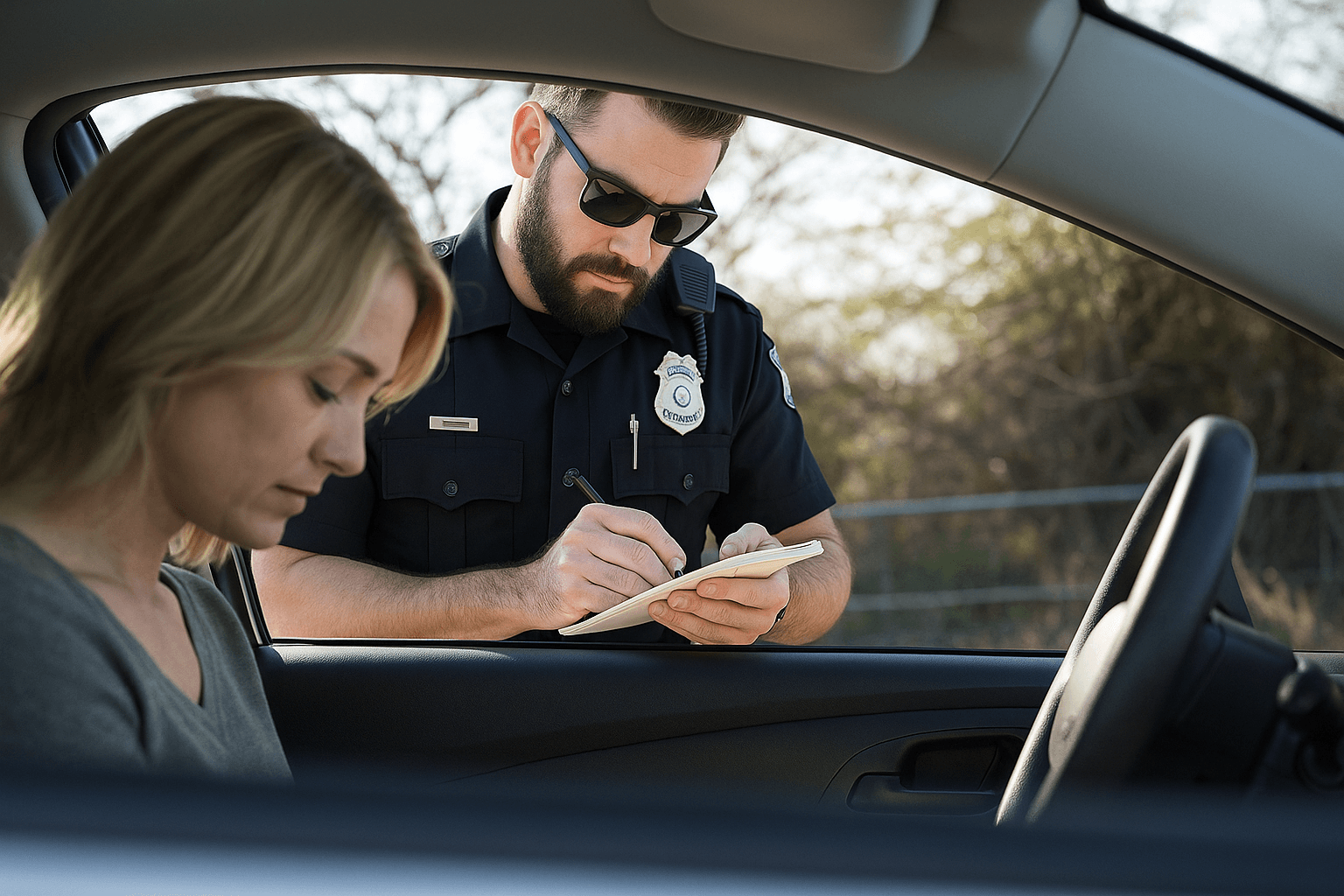
You Got the Ticket — Now the Clock Is Running
You were pulled over, you didn't have proof of insurance, and the officer wrote you a ticket under K.S.A. 40-3104. The citation itself feels like the consequence, but it's not. The real consequence is administrative: the Kansas Department of Revenue Division of Vehicles received electronic notification of your lapse the moment your carrier reported it. Your license suspension isn't contingent on a court conviction — it's triggered by the reported lapse itself, and it's coming whether or not you resolve the ticket in court.
Most drivers assume resolving the citation in municipal court clears the suspension. It doesn't. Kansas runs a dual-track system: the court handles the infraction, but KDOR handles your driving privilege. The two systems don't communicate the way you'd expect. You can pay the fine, complete diversion, or win your case in court — none of that automatically lifts the administrative suspension KDOR is preparing to impose. That suspension requires a separate resolution path, and SR-22 sits at the center of it.
Compare car insurance rates in your state
Get quotes from licensed carriers — no obligation, no spam, results in minutes.
Get Your Free QuoteKDOR Answer Window
60 days
Kansas Division of Vehicles allows 60 days from the date of the lapse notification to submit proof of insurance coverage or request a hearing. Missing this window triggers automatic suspension without further notice.
K.S.A. 40-3104; Kansas Department of Revenue
What Kansas Actually Requires After a No-Insurance Violation
Kansas law requires continuous liability insurance on every registered vehicle. When your carrier reports a lapse — whether you let the policy cancel, missed a payment, or simply didn't have coverage when the officer asked — KDOR's electronic verification system flags your registration and begins the suspension process. The system doesn't care whether you thought you had coverage, whether the lapse was brief, or whether you immediately bought a new policy after the stop. The lapse was reported, the clock started, and now you're in KDOR's administrative track.
To resolve the suspension, KDOR requires proof you've reinstated continuous coverage and filed an SR-22 certificate. The SR-22 is not insurance — it's a state filing your insurer submits electronically to KDOR proving you carry at least Kansas minimum liability limits: $25,000 per person for bodily injury, $50,000 per accident, and $25,000 for property damage. The filing must remain active for three years from your reinstatement date. If your carrier cancels your policy or you let it lapse during those three years, KDOR receives automatic notification and re-suspends your license immediately.
You cannot reinstate without the SR-22 on file. You cannot get the SR-22 without an active liability policy from a carrier licensed to write in Kansas and authorized to file SR-22 certificates with KDOR. This is the procedural blocker most drivers hit: they restore coverage but don't request the SR-22 filing, or they buy coverage from a carrier that doesn't file SR-22 in Kansas, or they assume the filing happens automatically when they renew their old policy. None of those paths work.
Kansas SR-22 must be filed before you pay the reinstatement fee — KDOR won't process reinstatement without proof of filing already in their system.
How to File SR-22 and Reinstate Your License

First, contact a carrier that writes non-standard or SR-22 policies in Kansas. Not all carriers file SR-22 — State Farm, Geico, Progressive, The General, Dairyland, Bristol West, and National General all write SR-22 policies in Kansas, but you must explicitly request the SR-22 filing when you purchase or reinstate coverage. The carrier files the certificate electronically with KDOR within 1-5 business days of your request. Do not wait for a paper certificate to arrive in the mail — Kansas processes filings electronically, and the paper copy is for your records only. KDOR's system updates when the electronic filing hits, not when you receive the paper.
Second, confirm the filing is in KDOR's system before you pay the reinstatement fee. Call the Division of Vehicles Driver Control Bureau at 785-296-3671 and verify your SR-22 is on file. If it's not there yet, wait. The $50 reinstatement fee is non-refundable, and paying it before the SR-22 posts doesn't move your reinstatement forward — it just wastes the fee and forces you to re-pay once the filing clears. Once the SR-22 is confirmed, pay the $50 reinstatement fee online at ksrevenue.gov or in person at any Kansas driver's license office. Your driving privilege reinstates the same day the fee clears, assuming no other holds exist on your record.
Related Articles


What Happens If You Miss the 60-Day Window
If you don't respond to KDOR's notification within 60 days of the lapse report, your license suspends automatically. Kansas doesn't send a final warning or grace period — the suspension takes effect on day 61. At that point, you're driving on a suspended license if you get behind the wheel, and that's a separate criminal charge under K.S.A. 8-262 carrying up to six months in jail and a $1,000 fine for a first offense. The original no-insurance ticket is a traffic infraction; driving on a suspended license is a misdemeanor.
Once suspended, you cannot legally drive until you complete the reinstatement process. Kansas does not issue restricted driving privileges for insurance-lapse suspensions the way it does for DUI-related administrative suspensions. You're off the road entirely until you file SR-22, pay the $50 reinstatement fee, and KDOR clears your record. If your job depends on driving or you have no alternative transportation, that suspension window becomes a significant hardship. The procedural lesson: file SR-22 before the 60-day window closes, not after the suspension lands.
If you're already suspended, the path forward is identical to the pre-suspension path: obtain coverage from an SR-22-filing carrier, request the SR-22, wait for KDOR to confirm electronic receipt, then pay the reinstatement fee. The suspension doesn't add extra requirements — it just adds time you're off the road and exposes you to criminal liability if you drive before reinstatement clears.
Kansas Reinstatement Fee
$50
Kansas charges a flat $50 reinstatement fee for insurance-lapse suspensions. This fee is separate from any court fines or citation penalties and must be paid directly to KDOR after the SR-22 filing is confirmed in their system.
Kansas Department of Revenue — Division of Vehicles
How Much SR-22 Filing Actually Costs
The SR-22 itself is a filing, not a policy, so carriers charge a one-time filing fee set by the carrier and state regulations. That fee typically ranges from $15 to $50 depending on the carrier. The real cost is your liability premium. No-insurance violations flag you as high-risk, and carriers price accordingly. Non-standard carriers — the ones that specialize in high-risk drivers — write most Kansas SR-22 policies, and their rates run higher than standard-market carriers.
Kansas requires you to maintain the SR-22 filing for three years from reinstatement. If you let your policy lapse or cancel before those three years expire, your carrier notifies KDOR electronically and your license re-suspends immediately. You'll pay another $50 reinstatement fee and start the three-year clock over. The procedural incentive is clear: once you file SR-22, keep continuous coverage for the full three years. Switching carriers is fine as long as the new carrier files an SR-22 before the old one cancels — but any gap, even one day, triggers re-suspension.
Compare Kansas SR-22 Carriers and File Today
You need coverage from a carrier that files SR-22 in Kansas, and you need it filed before your 60-day answer window closes or before you pay the reinstatement fee if you're already suspended. Rates vary significantly by carrier, driving history, and county, so the procedural move is straightforward: compare quotes from multiple SR-22-filing carriers, confirm the carrier files electronically with KDOR, and request the SR-22 at the time of purchase. Once the filing hits KDOR's system and you pay the $50 reinstatement fee, you're reinstated. Start your comparison now — the clock is running, and Kansas doesn't extend the 60-day window for drivers who wait.