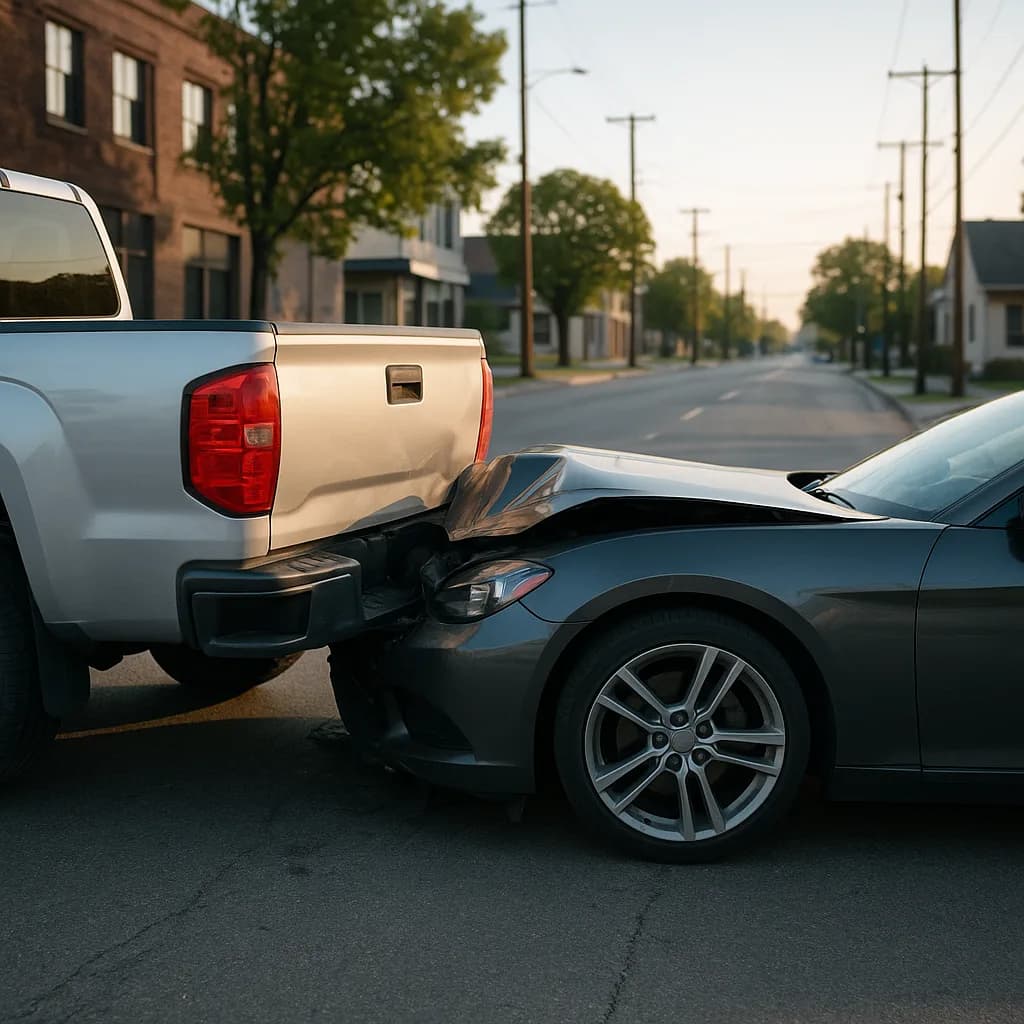
When Kansas Requires SR-22 After Your At-Fault Crash
You caused an accident in Kansas. Your insurer paid the claim. Now you're trying to figure out whether the state will require SR-22 filing for the next one to three years. The confusion is structural: Kansas does not require SR-22 because you caused an accident. The state requires SR-22 when specific violations or license actions accompany the accident — and those triggers are entirely separate from fault determination.
An at-fault accident by itself carries no SR-22 filing requirement in Kansas. No reinstatement fee. No license suspension tied to the crash. The Division of Vehicles does not track fault determinations from insurance claims. What the state does track: whether you were driving uninsured at the time of the crash, whether the crash triggered a criminal charge, whether your license was already suspended when the accident occurred, and whether you fled the scene. Those are the SR-22 triggers. Fault is irrelevant to all of them.
Compare car insurance rates in your state
Get quotes from licensed carriers — no obligation, no spam, results in minutes.
Get Your Free QuoteKansas Liability Minimums
$25,000/$50,000/$25,000
Kansas requires $25,000 bodily injury coverage per person, $50,000 per accident, and $25,000 property damage. Driving without these minimums at the time of an at-fault crash is what triggers SR-22 — not the crash itself.
K.S.A. 40-3107
The Four Triggers That Actually Mandate SR-22 in Kansas
Kansas law mandates SR-22 filing for four categories of violations, none of which is "at-fault accident." First: driving without liability insurance. If you caused the accident while uninsured, K.S.A. 40-3104 requires SR-22 for one year from reinstatement. Second: DUI conviction under K.S.A. 8-1567. If the at-fault crash involved alcohol or drugs and resulted in a DUI charge, SR-22 is required for one year. Third: driving while your license was canceled, suspended, or revoked. If your license was already under action when the crash occurred, SR-22 applies. Fourth: hit-and-run, vehicular homicide, or any felony involving a motor vehicle.
The common thread: these are all violations of criminal statutes or insurance law. An at-fault determination is a civil insurance finding. The Division of Vehicles does not receive fault data from insurers. Your carrier pays the claim, your premium increases at renewal, and the state takes no action unless one of the four statutory triggers applies. Most Kansas drivers who cause accidents while insured and legally licensed face zero state-level consequences beyond the insurance claim itself.
Kansas does not require SR-22 for at-fault accidents. The blocker: understanding whether uninsured status, a license action, or a criminal charge accompanied your crash.
What Happens When You Were Insured at the Time of the Crash

Your liability coverage pays the other driver's property damage up to your policy limit and their bodily injury claims up to your per-person and per-accident limits. If damages exceed your limits, you are personally liable for the excess — but that liability is a civil matter between you and the other party, not a state licensing issue. The Division of Vehicles receives no notification of the accident from your insurer. Your driving record remains clean at the state level.
Your insurer will likely increase your premium at renewal. Kansas allows insurers to surcharge at-fault accidents for three years from the accident date. The increase varies by carrier and your overall risk profile, but the state does not regulate the amount. The premium impact is real, but it is not an SR-22 situation. You shop for better rates with carriers that write your profile. No filing certificate is involved.
Related Articles


The Uninsured At-Fault Driver Path
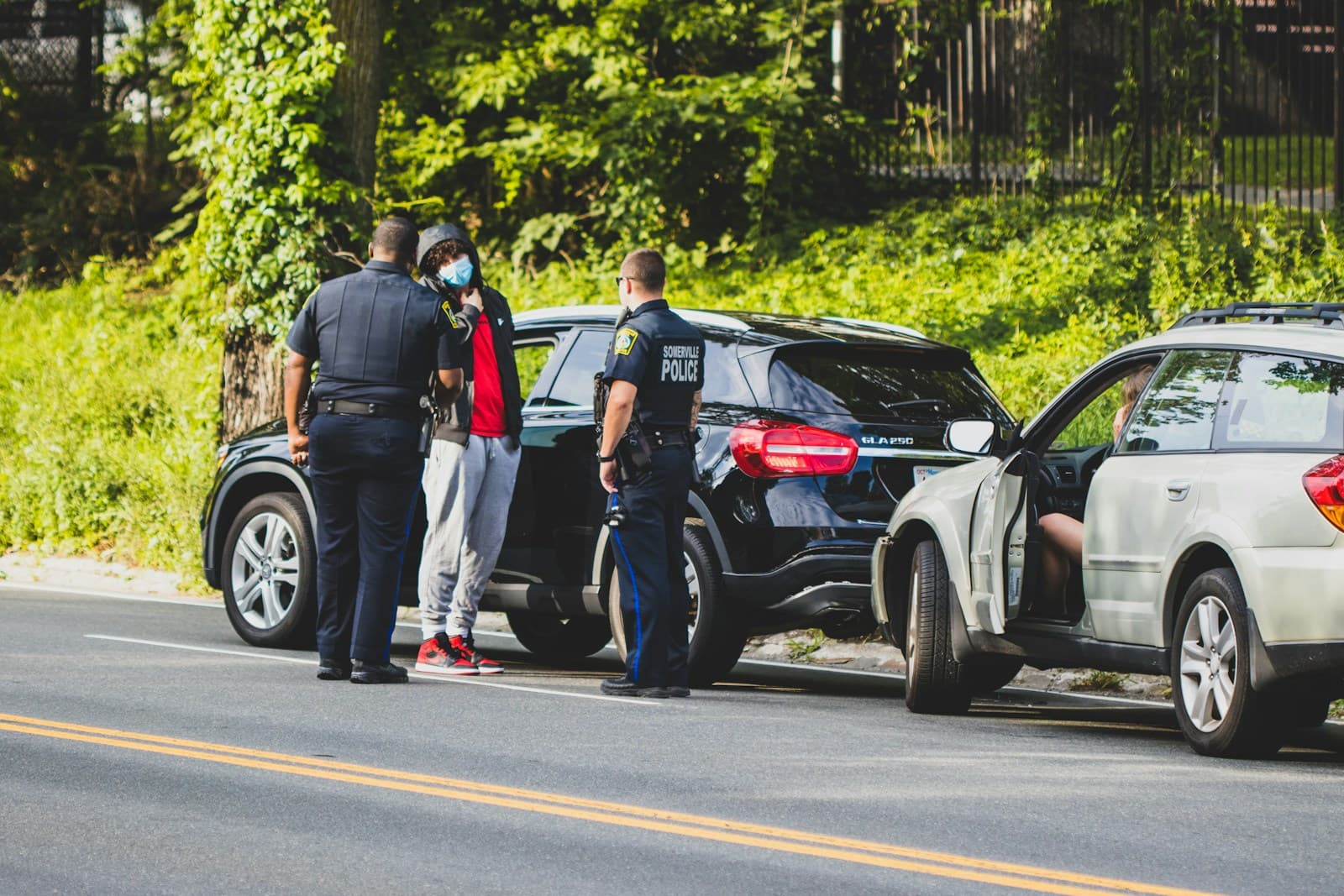
If you caused the accident while uninsured, Kansas law triggers a different sequence. The other driver's insurer pays their claim under uninsured motorist coverage, then reports your uninsured status to the Division of Vehicles. The state suspends your license and registration under K.S.A. 40-3104.
The financial responsibility requirement is the structural blocker most uninsured drivers miss. Kansas requires you to either pay the full amount of damages to the other party or post a bond or deposit with the state equal to the damages. Only after satisfying this requirement can you apply for reinstatement. The SR-22 filing proves you now carry insurance; it does not erase the debt. Many drivers secure SR-22 from a non-standard carrier, pay the reinstatement fee, then discover the Division of Vehicles will not lift the suspension until the financial responsibility condition is met.
Non-owner SR-22 policies are the typical solution for uninsured drivers who do not currently own a vehicle. These policies provide liability coverage when you drive a borrowed or rental vehicle and satisfy the state's SR-22 requirement. Non-owner SR-22 coverage does not cover a vehicle you own or regularly use — if you plan to purchase a vehicle during the filing period, you must switch to an owner SR-22 policy before driving it.
Kansas SR-22 Filing Period
1 year
Kansas requires SR-22 on file for one year from reinstatement for uninsured driving violations, DUI convictions, and most other triggers listed in K.S.A. 40-3118. The filing period begins when your license is reinstated, not when you purchase the policy.
K.S.A. 40-3118(d)
When the At-Fault Crash Involved Alcohol or Criminal Charges
If the at-fault accident resulted in a DUI charge under K.S.A. 8-1567, SR-22 is required regardless of whether you were insured at the time. Kansas law mandates SR-22 for one year following DUI conviction. The filing period begins after you complete your suspension and apply for reinstatement. If the crash also involved property damage or injury, you face both the DUI suspension and potential civil liability — the SR-22 requirement applies to the DUI trigger, not the accident itself.
Hit-and-run charges, vehicular homicide, or any felony involving a motor vehicle also trigger SR-22 under K.S.A. 40-3118. These are separate criminal violations that carry their own suspension periods and reinstatement conditions. The at-fault determination is incidental; the criminal charge is the SR-22 trigger. Most drivers in this category face multi-year suspensions and are required to maintain SR-22 for one year after reinstatement. Carriers willing to write post-felony policies are limited — expect to work with non-standard specialists like The General, Bristol West, or Dairyland.
Compare Carriers That Write Your Actual Profile
If your at-fault accident triggered SR-22 through uninsured status, DUI, or another statutory violation, your next step is comparing carriers that write Kansas SR-22 policies for your specific trigger. Not all carriers write all profiles. Geico, Progressive, State Farm, and Farmers file SR-22 in Kansas, but underwriting appetite varies by violation type. Geico writes post-DUI and uninsured drivers. Progressive writes most SR-22 triggers including post-suspension. State Farm writes SR-22 but may decline high-risk applicants depending on severity. Farmers routes SR-22 requests through local agents who control approval speed.
Non-standard carriers like Bristol West, Dairyland, The General, and National General specialize in high-risk profiles and often approve drivers that standard carriers decline. Monthly premiums are higher — Kansas drivers with SR-22 requirements typically pay $202 to $421 per month depending on violation history and coverage selections. Non-owner policies run lower because they exclude vehicle coverage. Compare at least three carriers that explicitly write your trigger before committing. The filing itself is electronic and reaches the Division of Vehicles within one to three business days once the policy is active.